
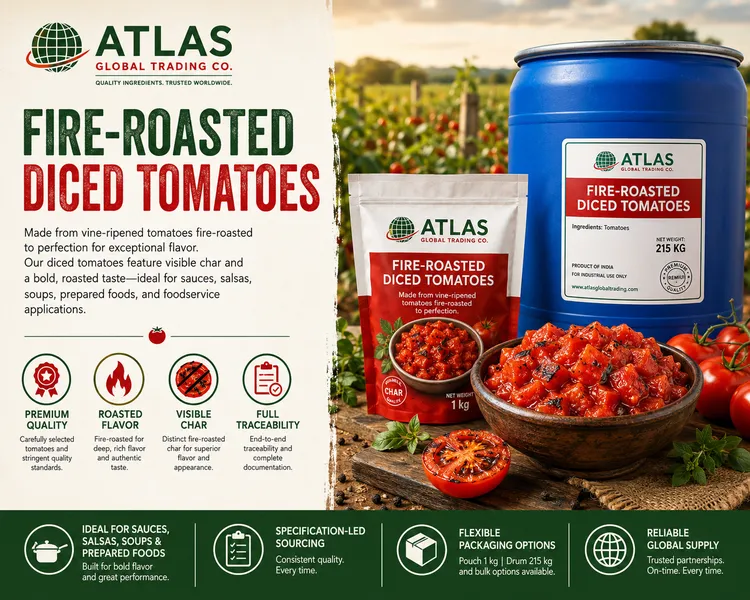
Product overview
Fire-roasted diced tomatoes combine visible tomato pieces with a roasted flavor profile developed through exposure to flame or high-heat roasting. The process can create characteristic char marks, darker roasted notes and added savory complexity while preserving the recognizable diced format required in many sauces, salsas and prepared foods.
Atlas Global Trading Co. sources specialty tomato ingredients through a multi-origin network of farms, processors and supply partners. We match available programs to the customer’s target cut size, roast level, piece integrity, packing medium, finished-product performance, commercial pack format and delivery destination.
Roast profile and visible char
Roast intensity can influence both flavor and appearance. Some formulations require a relatively mild roasted note with limited visible char, while others are designed around a stronger flame-roasted character and more pronounced darkened tomato surfaces.
Because roast style can differ between processors, buyers should review both the technical specification and representative product samples when roasted flavor and visual char are important elements of the finished product.
Cut size and piece integrity
Cut size should be matched to the finished application and processing conditions. Salsa, chunky sauces and prepared meals may require clearly visible pieces, while soups or blended sauces may tolerate smaller or softer cuts.
Piece integrity can also change during pumping, mixing, cooking, hot filling or retort processing. Manufacturers should consider how much structure needs to remain after production rather than evaluating the incoming ingredient only.
Specification focus
Roast level, cut size, packing medium and formulation should be matched to the finished product. Buyers may also evaluate piece uniformity, visible char, color, flavor intensity, texture, drained solids, pH or acidity where relevant, microbiological parameters and packaging requirements.
For specialty diced tomato products, the controlling quality parameters are often both analytical and sensory. A specification may define measurable criteria, but flavor and roast character should also be validated against the customer’s own formulation and process.
Packing medium and formulation
Fire-roasted diced tomatoes may be packed in tomato juice, puree or another processor-defined medium. The packing medium contributes additional liquid and tomato solids and can affect the viscosity, solids balance and overall flavor of the final formulation.
In commercial recipes, fire-roasted diced tomatoes are often combined with tomato paste, puree, spices, peppers, onions, smoke notes or other savory ingredients to build a layered roasted profile. The appropriate inclusion rate depends on the desired intensity and visible piece content.
Typical applications
- Salsa and Mexican-style sauces
- Dips and queso-style preparations
- Soups, stews and chili
- Barbecue and grilling sauces
- Pasta and cooking sauces
- Ready meals and prepared foods
Processing considerations
Roasted tomato pieces may soften further during commercial processing, particularly in applications involving long cook times, agitation or retort. Equipment selection, pump shear, mixing intensity and thermal exposure can all influence the final level of piece definition.
Customers developing products with a strong visual identity should test the selected ingredient under production-representative conditions to verify that both the roasted character and diced appearance remain appropriate after processing.
Organic and conventional programs
Where organic supply is requested, we confirm the certification scope and supporting documentation applicable to the selected origin, processor and supply lot. Conventional programs can be optimized around technical performance, roast style, economics, origin and continuity of supply.
Depending on the selected program, documentation may include the current technical data sheet or specification, certificate of analysis, applicable certification records and relevant shipment or lot documentation.
Sourcing and commercial planning
Multi-origin sourcing can provide additional flexibility when customers are balancing sensory profile, technical requirements, crop availability, freight economics, lead time and continuity of supply. For recurring programs, forecast volumes and preferred shipment timing help support supply planning.
A complete inquiry should include desired cut size, roast intensity, visible char expectations, packing medium, packaging format, annual or shipment volume, certification needs and delivery destination.